
HMO Right Fit Sizing Guide
How to Measure for Cock Rings, Head Rings & Ball Stretchers
Instructional adult content: This guide includes explicit measuring instructions for educational purposes.
 How to Measure for a Cock Ring
The most important step in choosing a rigid cock ring is getting the size right.
A properly fitted ring should feel secure and supportive without painful pressure,
numbness, unusual discoloration, swelling, or loss of normal sensation.
For a traditional cock ring worn around the penis and testicles, begin by measuring
the circumference of the area where the ring will sit. The HMO Right Fit
Calculator below converts that measurement into an appropriate ring diameter.
If you are new to rigid rings, measure carefully more than once. A few minutes spent
confirming your size can make a major difference in comfort and fit.
 Step 1 — Prepare
A flexible tailor’s measuring tape is easiest to use. If you do not have one, use a
piece of non-stretching string or ribbon, a ruler, and a marking pen.
You can measure in inches, centimeters, or millimeters. The calculator below can work
with any of these units.
Step 2 — Measure Your Circumference
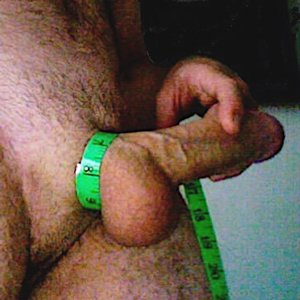
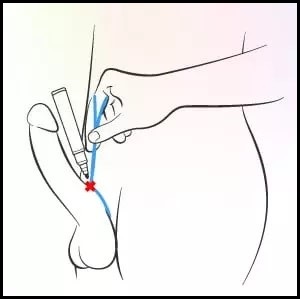
For a conventional cock ring worn around both the penis and testicles, pass the tape
under the testicles and around the top of the penis at the point where the ring will sit.
Pull the tape snugly and evenly. It should be firm enough to represent the
fit you want, but it should not painfully compress the tissue.
If using string, wrap it around the same area, mark where the two ends meet, then lay
the string flat and measure the distance between the marks.
☝ The HMO One Finger Rule
Over the years, we have found the following simple fit check useful when measuring:
- When soft: you should be able to just fit one finger beneath the tape or string.
- When fully erect: you generally should not be able to fit that finger beneath it.
- If your soft, semi-erect, and erect measurements differ, take several readings rather than relying
on a single measurement.
Bodies change with temperature, arousal, activity, and time of day, so repeated
measurements are more useful than trying to obtain one supposedly perfect number.
Step 3 — Use the HMO Right Fit Calculator
Your tape or string gives you the circumference. A rigid cock ring,
however, is normally sold by its inside diameter.
Enter your measured circumference into the HMO Right Fit Calculator below. It will
convert that measurement into a recommended ring diameter.

What Size Cock Ring Should I Choose?
The calculator gives you a starting diameter, but fit is not determined by mathematics
alone. Ring width, weight, shape, placement, and individual anatomy can all affect how
a given diameter feels.
If your calculated measurement falls between available sizes, do not automatically
choose the tighter ring. For someone new to rigid metal rings, the slightly larger option
is often the more sensible starting point.
A rigid ring does not stretch to compensate for an incorrect size. That is why
measurement matters more with stainless steel and other rigid materials than it does
with highly flexible rings.
How Should a Cock Ring Fit?
A properly fitted cock ring should feel secure, supportive, and noticeable without
feeling painfully tight.
During wear, remain aware of comfort, color, temperature, and normal sensation.
Remove the ring if you experience pain, numbness, unusual discoloration, swelling,
irritation, or loss of normal sensation.
If you are unsure between two sizes, it is generally better to begin conservatively
and learn how your body responds before moving to a tighter fit.
 How to Measure for a Head or Shaft Ring
Head and shaft rings are measured differently from a traditional cock ring because
they sit around a smaller section of the penis rather than around both the penis
and testicles.
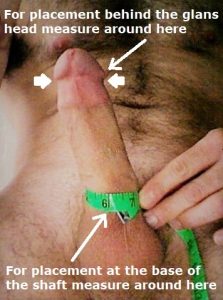
- Measure at the exact location where you intend to wear the ring.
- For a head ring, this is commonly just behind the glans.
- For a shaft ring, measure the specific point along the shaft where the ring will sit.
- Measure snugly, but do not use the HMO One Finger Rule for these smaller rings.
- Take more than one measurement if your size changes noticeably with arousal.
Many users eventually keep more than one head or shaft ring size because fit can change
with placement, arousal level, ring width, and the desired amount of contact.
How to Choose a Head or Shaft Ring →
 How to Measure for a Ball Stretcher
Ball-stretcher sizing is based on the circumference of the scrotal area above the
testicles where the stretcher will sit.
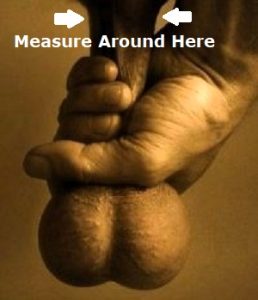
- Measure when the testicles are warm and relaxed.
- A warm shower beforehand can make measuring easier.
- Gently pull the testicles downward and measure around the scrotal tissue above them.
- Take several measurements if necessary before choosing a rigid size.
Ball-stretcher sizing depends on anatomy, compression, design, and desired fit, so use
the measurement as a starting point rather than assuming that one size suits everyone.

 Not Sure Yet? Test Your Size Before Moving Into Metal
If you are new to rigid cock rings, head rings, or shaft rings — or if your measurement
falls between sizes — an inexpensive sizing ring can be a useful way to test fit before
investing in stainless steel or aluminum.
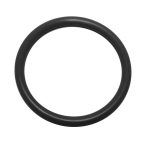
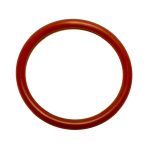
Our Buna-Nitrile and Red Silicone sizing rings are useful for comparing nearby sizes
and learning which diameter feels best for your anatomy and preferred placement.
- Use smaller sizes to test head or shaft ring fit.
- Use larger sizes to test conventional cock-ring fit.
- Use metric sizes when you want finer sizing increments.
- Use sets to compare several nearby diameters before choosing metal.
What Comes Next?
Once you know your size, the next step is choosing the ring style, width, weight,
and construction that best suit the way you intend to wear it.
 Recommended Starting Products
These versatile styles are useful starting points for customers who want a straightforward,
well-balanced introduction to rigid rings.